
If you have followed me for any length of time, you know sand was my thing. My whole run routine was built on it: keep it dry, scoop it like a litter box, done. It worked for years because my run stays dry. The winter panels go up, a little rain blows in now and then, and it dries right back out.
This fall, a nor'easter changed that. The storm soaked my run completely, right before the panels went up for the season. Wet sand sealed inside a winter run never dried. It caked into a mat, it started to smell, and the scoop that used to glide through it just stopped working. I ended up shoveling out the substrate I had recommended to thousands of people.
I want to be clear about something: sand did not fail me. One storm found its one weakness. Soaked through and unable to dry, sand does not recover. That is not a reason to trash a material that served my flock well. It is a reason to ask a better question: what should the floor of a chicken run be, if it has to survive getting soaked?
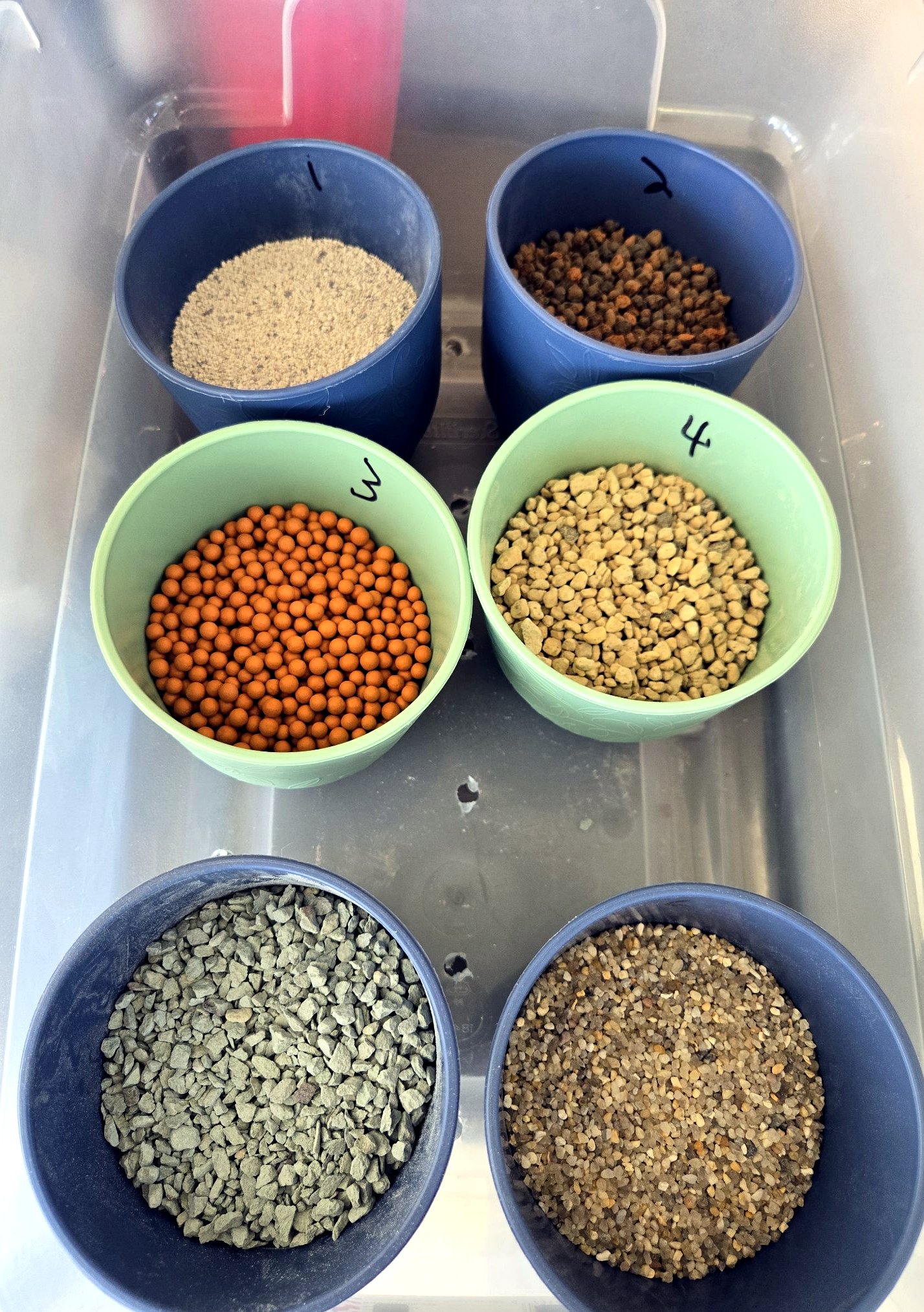
Instead of guessing, I am testing. Eight materials are in trial right now, running in shelf cups and outdoor totes at my own coop: sands, mineral granules, zeolite, pumice, foamed glass, and expanded clay among them. Every one of them gets the same treatment. A 60 second shake test for dust and fines. A soaking test, because the storm is the whole point. Scoop tests, wash tests, and freeze and thaw cycles before winter does it for real.
The rules are set in advance, and I am publishing them so I cannot move the goalposts later. A challenger only advances if it beats sand on the two things that killed my run: caking when wet, and washability after wet soiling. And it cannot lose to sand on droppings release, dust, or odor. If nothing passes, I will publish that too.
One distinction this journal will keep making, because it matters: not all clay pellets are the same material. The lightweight, porous clay balls sold for houseplants soak up water like a sponge. The dense expanded clay in this trial has a sealed, vitrified shell fired onto it, built to shed water instead of drinking it. Lumping those two together is like lumping a sponge and a marble together because both are round.
There is nothing for sale here, and there will not be for a long time. This journal is the documentation: the methods, the numbers, the failures, in the open, as they happen. When the data says something worth hearing, you will hear it here first.
Next entry: the shake test. Eight jars, sixty seconds each, and one material that embarrassed the rest on dust.